Car Sidelights Explained and How to Use Them Correctly
📌 Key Takeaways
- Sidelights (also called parking lights) are the small, dim lights in the corners of your car.
- Highway Code Rule 249 requires you to leave them on when parking on any road with a speed limit above 30 mph.
- Ignoring this rule can result in a fine of £35–£75 under the Road Vehicles Lighting Regulations 1989.
- On 30 mph roads, sidelights aren’t needed provided you park close to the kerb, at least 10 metres from a junction, facing the flow of traffic.
- They won’t drain a healthy battery overnight but don’t leave your headlights on, as that’s both illegal and battery-killing.
Sidelights (or parking lights) are the small, dim lights found on the front corners of a car, usually built into the headlight area. The main purpose of these lights is to increase visibility in low light conditions specifically between sunset and sunrise.
Here’s what car sidelights do:
- Front Sidelights: Usually white or amber, these lights are located near the vehicle’s headlights. They help other drivers spot your car, especially when it’s parked or in situations with poor visibility (e.g., in foggy or low-light conditions). They are not as bright as headlights, so they don’t illuminate the road ahead.
- Rear Sidelights: Red in color, they function similarly to the front sidelights, making the car more visible to other drivers from behind.
At Goodluck driving school we get a lot of questions about car sidelights. Let’s clear things up in a few quick steps.
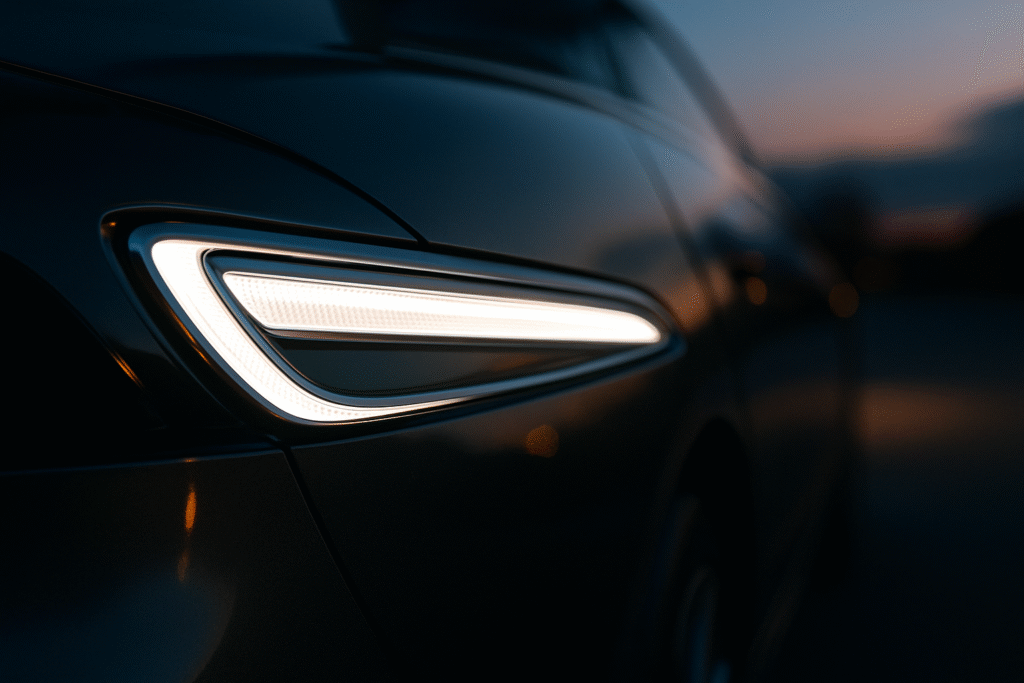
I see questions about sidelights all the time. Let’s clear things up in a few quick steps.
What Are Car Sidelights?
- Car sidelights are also called parking lights
- Sit in the front corners of your car
- Less bright than headlights
- Help other drivers see you when it’s not dark enough for full beams
How Do You Turn Them On?
- Most modern cars use the same switch as your headlights
- Look for a stalk on the steering wheel or a dial on the dashboard
- The sidelights car symbol often shows two semi-circles facing opposite directions
When Should You Use Car Sidelights?
- During dawn, dusk, or poor weather
- When parking on roads with speed limits over 30 mph
- Anytime you want to boost visibility without using full headlights
Are Sidelights a Legal Requirement?
- In the UK, yes, for parking on roads above 30 mph
- You risk fines if you park there without sidelights
- They help others spot your car in low-light settings
Do Sidelights Stay Always On?
- No, You don’t need to keep them on all the time.
- They’re meant for specific times when it’s not dark enough for dipped headlights
- Switch to dipped beams if visibility gets worse
Can You Drive With Only Car Sidelights?
- Yes, on well-lit roads with a 30 mph limit
- Headlights still offer better visibility
- It’s safer to use dipped headlights in most cases
Which Light Should You Switch On in Daytime?
- Daytime running lights if your car has them
- If not, sidelights can help in overcast conditions
- Switch to dipped beams if visibility is poor
What’s the Difference Between Parking Lights and Sidelights?
- Parking lights and sidelights both are same thing with a different name
- Both are designed to make you visible to others
- They’re not meant to light up the road ahead
Which Lights Should You Use at Night?
- Dipped headlights for most driving
- Full beams if it’s very dark and no oncoming traffic
- Use car sidelights only if it’s well lit and driving at slow-speed
What’s the Purpose of a Side Light?
- Stay visible when it’s not fully dark
- Comply with parking rules in higher speed zones
- Avoid draining the battery if you need lights on for long periods
What Happens If You Don’t Use Sidelights When You Should?
If you fail to utilize parking lights as required by law, you may be issued a Penalty Charge Notice under the Road Vehicles Lighting Regulations 1989.
Fines typically range from £35 and £75, tho you may pay less if you pay within 14 days. (RAC, FixMyCar) Police are more likely to enforce this on quicker routes, in rural regions, and in locations where accidents occur often.
There’s also a separate fine to know about. Driving on sidelights after dark on a dark road can be treated as a lighting offence under the Road Vehicles Lighting Regulations, which requires dipped headlights between sunset and sunrise.
This can result in a £100 fixed penalty notice. (MSN Cars, May 2026) Authorities are strictly implementing this in rural regions where low-visibility collisions occur often.
Frequently Asked Questions
Are sidelights the same as parking lights?
Yes. The terms sidelights and parking lights refer to the same thing. They are the little, faint lights in the front corners of your vehicle (white or amber) and the matching back lights (red). The term “parking lights” refers to its legal use when parked on roadways with speeds more than 30 mph.
Can you drive with only sidelights on at night?
Not legally on unlit roads. The Road Vehicles Lighting Regulations require dipped headlights between sunset and sunrise. Sidelights alone after dark on an unlit road can mean a £100 fixed penalty. On well-lit urban roads with a 30 mph limit, sidelights are technically enough, but dipped headlights are always safer and widely recommended.
What is the fine for not using sidelights when parked above 30 mph?
Failing to display parking lights where required makes you liable for a Penalty Charge Notice. Fines typically range from £35 to £75 and are usually cut if you pay within 14 days. The exact amount is set regionally.
Will leaving sidelights on overnight drain the battery?
A healthy battery should handle a few hours of sidelights without issue. Overnight is risky if your battery is older or weak. Headlights left on overnight will almost certainly flatten any battery. They’re also illegal when parked.
What’s the difference between sidelights and daytime running lights?
Daytime running lights (DRLs) turn on automatically when you start the engine and cover only the front of the car. Sidelights are manually activated and cover both front and rear. DRLs don’t count as parking lights because the rear of your car stays dark.
Do sidelights come on when you turn the ignition off?
No, You need to turn them on manually before leaving the vehicle. Some cars have a feature where leaving the indicator stalk down activates the left-side sidelights only, but this varies by manufacturer and model.
BOOK NowOR CALL US AT
0752-780-7069
Latest Blog

October 17, 2026


October 5, 2026
September 21, 2026

September 10, 2026
May 27, 2026
Book your first driving lesson for only £35/hour (min 2 hr)
Book a lessonSee Our Reviews On



We offer friendly, value-for-money, driving lessons in Merton, Sutton and South West London to suit drivers of all abilities. We guarantee all pupils pass first time.
 Can I help you!